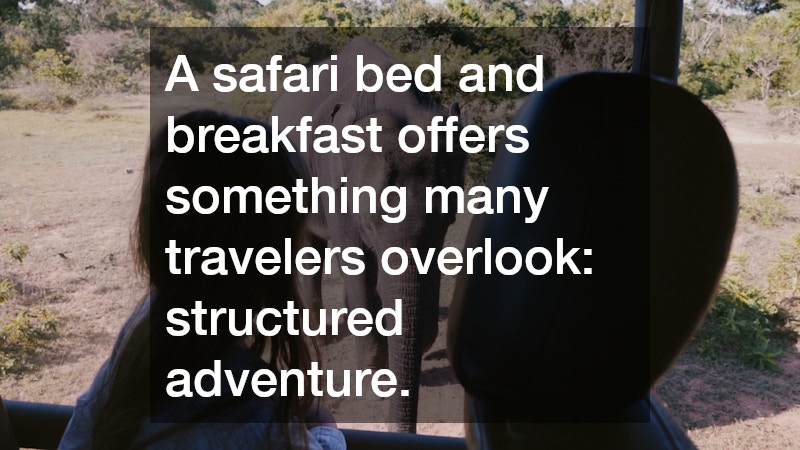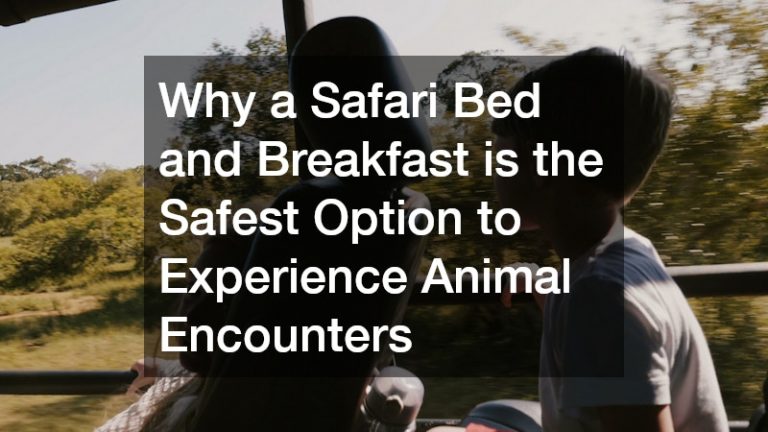
Few travel experiences compare to watching elephants move silently across an open plain or hearing lions call in the distance at dusk. Yet alongside that excitement sits a very real concern: wildlife is unpredictable. News stories about tourists stepping too close for a photo or wandering off alone can make even seasoned travelers hesitate.
That’s where choosing the right accommodations makes all the difference. A safari bed and breakfast offers something many travelers overlook: structured adventure. You still get proximity to wildlife, but within an environment intentionally designed to manage risk.
Instead of navigating remote terrain alone or relying on loosely organized tours, you’re supported by trained professionals, secure facilities, and established safety systems.
The result is not a watered-down safari. It’s an immersive one—with guardrails in place.
Choose Properties With Certified Guides and Structured Game Drives
The single most important safety factor on safari isn’t the building you sleep in—it’s the person guiding you through the bush.
When evaluating where to stay, start by asking direct questions about guide credentials. Reputable properties will gladly explain their team’s qualifications. Look for:
- Government-licensed or conservancy-certified guides
- Formal wildlife behavior training
- Wilderness first-aid certification
- Ongoing continuing education or conservation partnerships
A well-run safari bed and breakfast typically builds its schedule around structured game drives. These are not casual outings; they follow specific routes based on animal movement patterns, weather conditions, and seasonal risks. Guides communicate with each other via radio and adjust plans if large predators are active in a particular area.
Contrast this with self-drive safaris or loosely arranged excursions, where travelers may misjudge distance, underestimate animal speed, or misunderstand warning signals. An experienced guide can read subtle cues—a flick of a tail, a shift in posture—that signal when it’s time to reposition the vehicle.
Before booking, ask how safety briefings are conducted. A thoughtful property will provide orientation sessions before your first excursion and encourage questions rather than rushing you out the door.
Stay in Secure and Strategically Designed Accommodations
It’s easy to romanticize sleeping under canvas in the middle of the bush—until you hear something large brushing past your tent at 2 a.m.
Most safari bed and breakfast properties are intentionally designed with both immersion and protection in mind. You might find elevated decks that provide a vantage point without placing you directly at ground level, reinforced doors and windows, or discreet perimeter barriers that prevent wildlife from wandering too close to guest areas.
Some properties rely on natural buffers, such as riverbanks or open clearings, to maintain a safe distance. Others employ overnight security staff who quietly monitor the grounds.
Before booking, review recent guest photos and ask about nighttime protocols. Is staff available if you need assistance? Are guests escorted after dark? These details matter more than aesthetics.
Safety doesn’t mean sacrificing atmosphere—it simply means smart design.
Benefit From Controlled Wildlife Viewing Environments
Many safari accidents occur not because animals are aggressive, but because humans misjudge boundaries. Controlled viewing environments help prevent those miscalculations.
At a professionally operated safari bed and breakfast, wildlife encounters are rarely spontaneous or chaotic. Vehicles maintain regulated distances from animals. Group sizes are intentionally small to reduce noise and crowding. Guides position vehicles at angles that allow clear views without blocking animal movement paths.
Walking safaris, when offered, are conducted under strict supervision. Armed rangers or trackers accompany guests, and routes are selected based on fresh tracking information.
If you want to assess how controlled an environment truly is, ask:
- How many guests are allowed per vehicle?
- Are children subject to age restrictions?
- What happens if an animal approaches unexpectedly?
Thoughtful answers signal thoughtful management.
Access On-Site Staff and Emergency Protocols at All Times
Imagine twisting an ankle on uneven terrain or developing sudden dehydration in extreme heat. In remote settings, small problems can escalate quickly.
A well-managed safari bed and breakfast operates with contingency planning in mind. Communication systems—whether satellite phones, radios, or emergency beacons—connect guides and staff to broader networks. Many properties maintain relationships with nearby clinics or air evacuation services.
You don’t need to interrogate staff, but you should understand the basics. Ask how medical situations are handled. Is there a trained responder on site? How far is the nearest hospital? Clear, confident answers indicate preparation rather than improvisation.
Peace of mind often comes from knowing help is structured—not just available.
Learn Safe Animal Behavior Practices Before You Explore
Safety is not only about infrastructure; it’s about awareness. The best properties treat education as part of the experience.
Before your first outing, expect a briefing that covers:
- Why sudden movements can trigger prey instincts
- How to remain calm if wildlife approaches
- When silence is essential
- Why neutral clothing colors matter
These details may feel obvious, but in the excitement of spotting a rhino or cheetah, instinct can override judgment. A safari bed and breakfast that invests time in guest education reduces the likelihood of impulsive decisions.
Participate fully in these sessions. Ask about species specific to the region. Understanding behavior transforms encounters from nerve-wracking to fascinating.
Enjoy Smaller Guest Groups That Reduce Risk
Crowds change animal behavior. They also increase the likelihood of someone making a poor decision.
Boutique safari settings typically limit the number of guests per drive, which allows guides to monitor everyone closely. Smaller groups mean quicker response times and less pressure to compete for photographs. There’s space to observe quietly rather than lean out for a better angle.
This controlled pace also benefits the animals, reducing stress and preserving natural patterns—another indirect safety advantage.
Choose Locations Within Managed Conservancies or Private Reserves
Not all safari regions are managed equally. Private conservancies and well-regulated reserves maintain controlled entry points, enforce vehicle limits, and monitor wildlife movements more closely than heavily trafficked public areas.
A safari bed and breakfast operating within these managed zones benefits from anti-poaching patrols, coordinated ranger networks, and real-time communication about animal activity.
When researching, confirm whether the property is located within a protected conservancy. This detail often shapes the overall safety infrastructure of your stay.
Follow Smart Personal Safety Practices During Your Stay
Even in the safest environment, personal responsibility matters. Keep these principles in mind:
- Never leave your room after dark without guidance if instructed not to
- Avoid feeding or attempting to attract animals
- Keep doors and windows secured
- Stay with your guide at all times during excursions
It may feel tempting to step away for a private photo or wander closer for a clearer view. Resist that impulse. Wildlife encounters are powerful precisely because they are wild.
Adventure does not require recklessness. By choosing a safari bed and breakfast with strong safety standards—and by playing your part—you can experience extraordinary animal encounters with confidence. The thrill remains. The risk is thoughtfully managed.